OFFICES DESIGNED TO PROMOTE WELL-BEING

OFFICES DESIGNED TO PROMOTE WELL-BEING

Hybrid work has transformed offices across Europe.

Most organizations now accept the fact that employees don’t come to the office simply because the space exists, but because it offers them something worth the trip. As a result, “time spent in the office” has quietly become one of the most revealing indicators in workplace design.

However, it is not about keeping employees on the premises longer, but about understanding why they stay there.

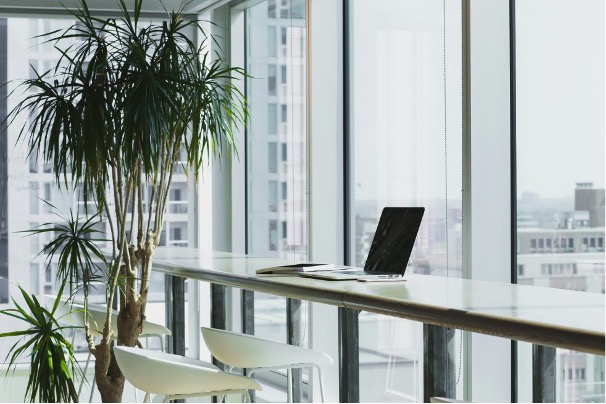
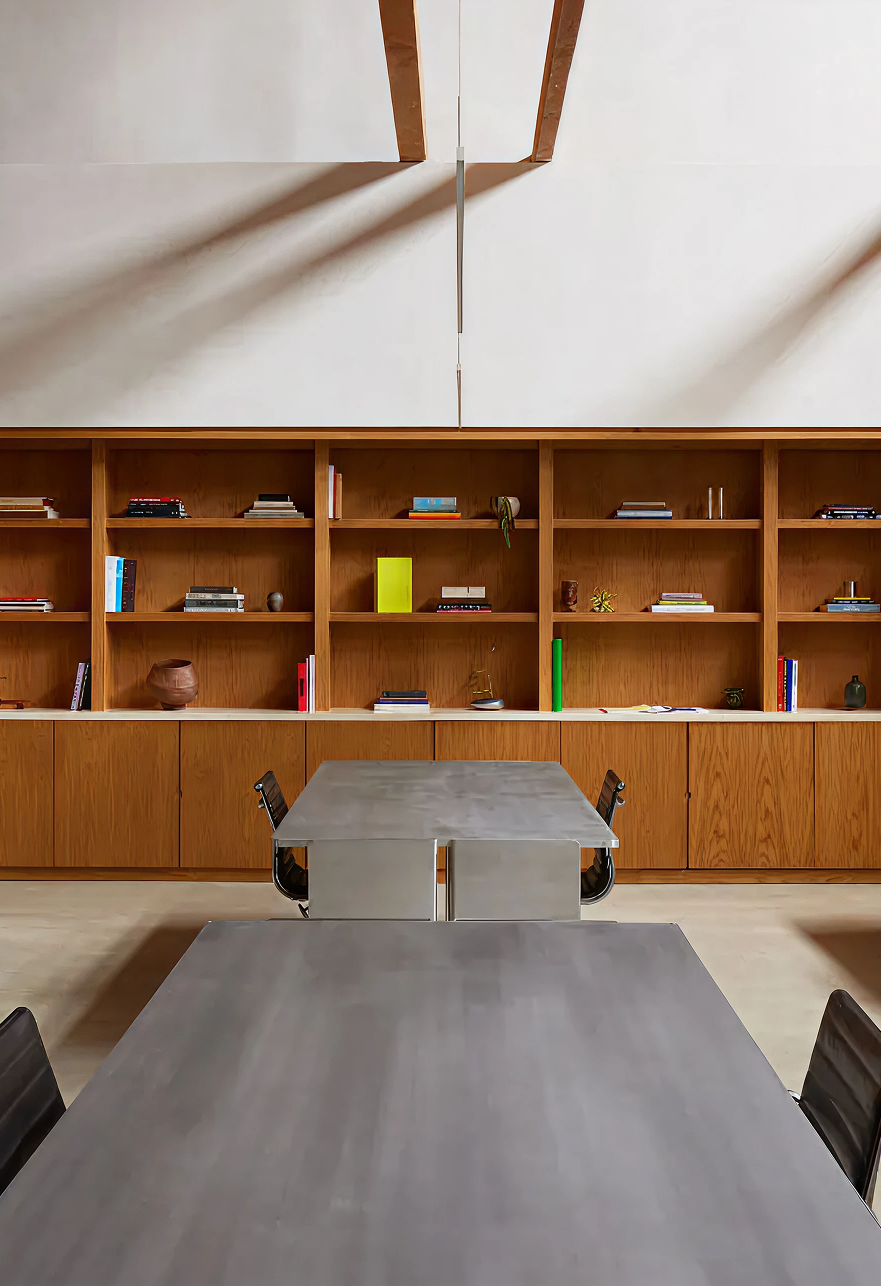
Wellness Offices 1

Before 2020, the office was a default location. Today, it is a destination with a specific purpose. Employees choose to go there when this space allows them to perform tasks that they cannot do as effectively at home, such as collaboration, socializing, team building, and intense concentration without domestic distractions.

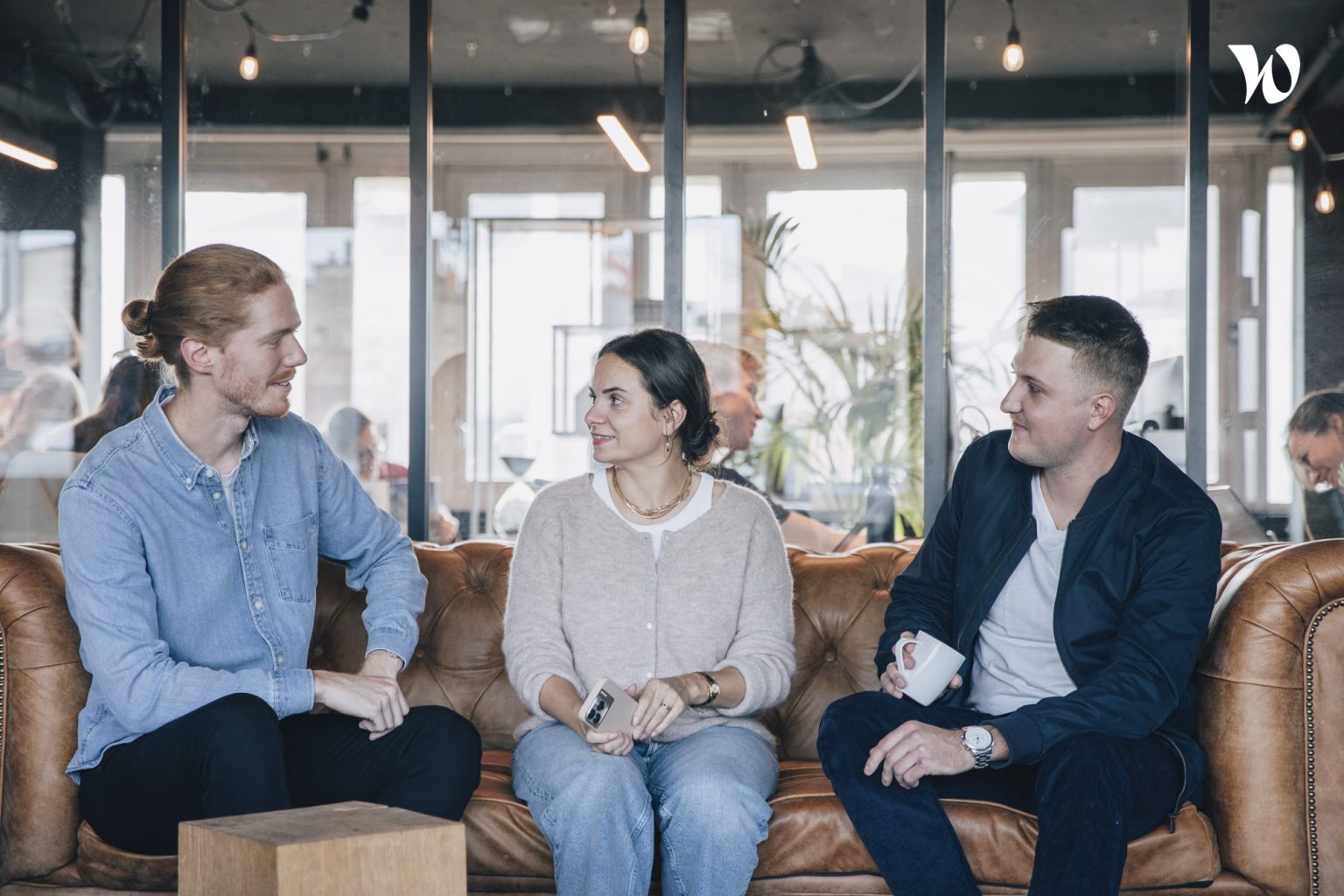
Time spent at the office reveals when these needs are being met. For example, if coworkers arrive for a meeting and leave immediately, the workplace does not seem to be suitable for ongoing engagement. If people stay after face-to-face sessions to have an informal coffee or use the office as a space for reflection, you can be sure that the environment is fulfilling its purpose.

What motivates people to stay in modern workplaces?

In summary, it is a combination of environmental, emotional, and social factors, which may include:

  • Analog balance: tactile and sensory materials that compensate for intensive screen work take the form of natural textures, soft surfaces, and even biophilic moments.

  • Microhospitality: coffee areas should not be an afterthought, but rather a place that encourages conversation and relaxation. Careful consideration should also be given to the types of seating, as comfort can make the difference between staying or leaving.
  • Flexible areas: relaxation spaces, quiet corners, reading areas, creative spaces, and project rooms that can be adapted to the needs of a hybrid workforce are essential.

  • Analog balance: tactile and sensory materials that compensate for intensive screen work take the form of natural textures, soft surfaces, and even biophilic moments.

  • Microhospitality: coffee areas should not be an afterthought, but rather a place that encourages conversation and relaxation. Careful consideration should also be given to the types of seating, as comfort can make the difference between staying or leaving.

Well-being at work has gone from being a simple perk to becoming a goal in itself, as neuroscience and environmental psychology constantly highlight the impact of materials, light, acoustics, and sensory comfort on cognitive performance and emotional well-being. If the office does not promote well-being, employees will not stay there and will not want to return day after day.

Even the best workplace strategy can fail if its implementation is mediocre. That's why organizations that design their spaces with the goal of fostering intentional presence, rather than achieving attendance targets, will naturally create spaces that attract people for the right reasons.

This topic is addressed in our latest guide, written in collaboration with IA, entitled "Designing for Well-Being: Why Time, Trust, and Tangibility Define the Next Generation of Interiors."

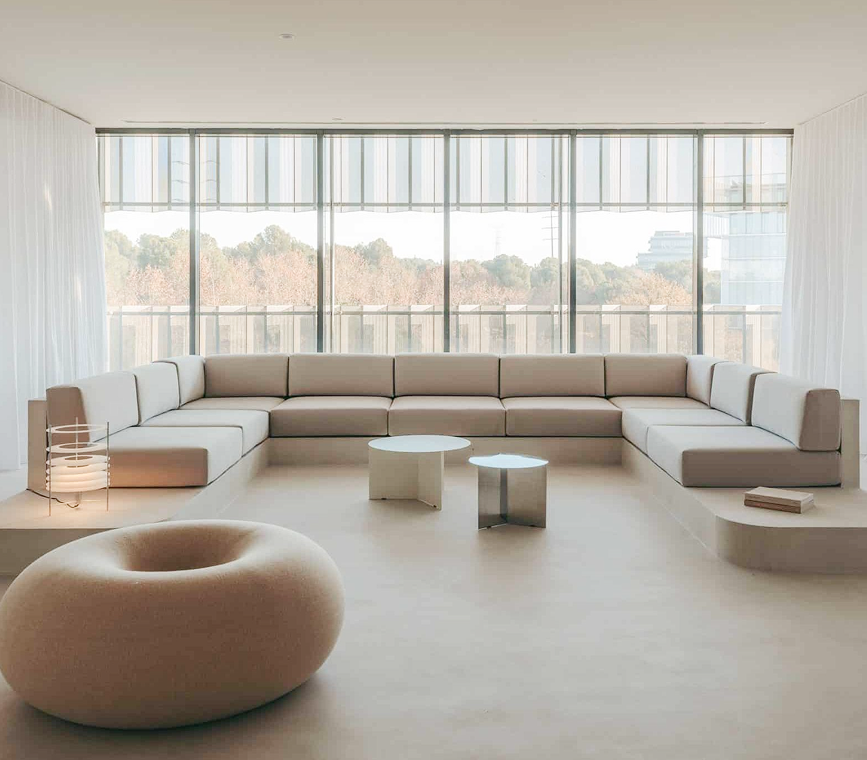
Wellness Offices 2
© Ceremony of Roses Offices by 22RE

You may also like...

ART IN THE OFFICE
― I deeply believe that art has that power: to transform the perception of a space, to stimulate...
JO Paralímpicos: inspiraciones
- Este fin de semana recibí mis entradas conmemorativas de los Juegos Olímpicos y Paralímpicos. Esto me...
THE HEYDAY OF ANALOG SPACES
― Our teams immersed themselves in the heart of an inspiring ecosystem, deeply rooted in our lives...
Article Office Paper

OFFICE PAPERS

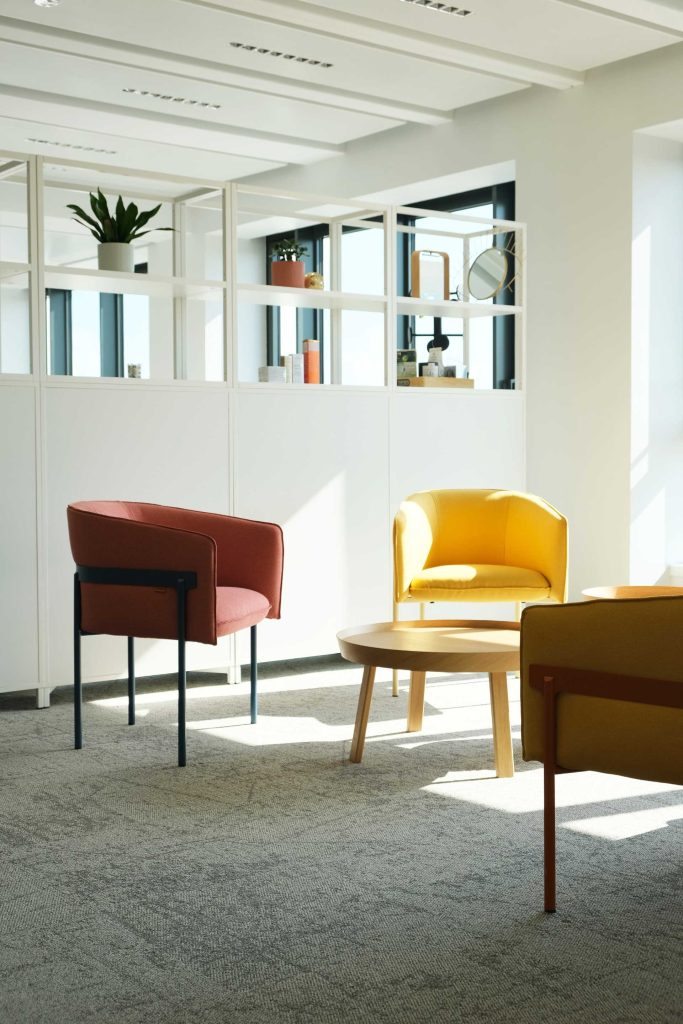
Pequeño salón con sillones rojos y amarillos, mesa baja de madera clara, en NAOS, por Parella.

GRACIAS

Su mensaje se ha enviado correctamente.
¡Le responderemos muy pronto!